Flag grommets and double-stitched hems: the details that decide how long a flag lasts
How brass grommets, double-stitched hems and reinforced corners stop a printed flag tearing at fixing points, and what to specify before you order.
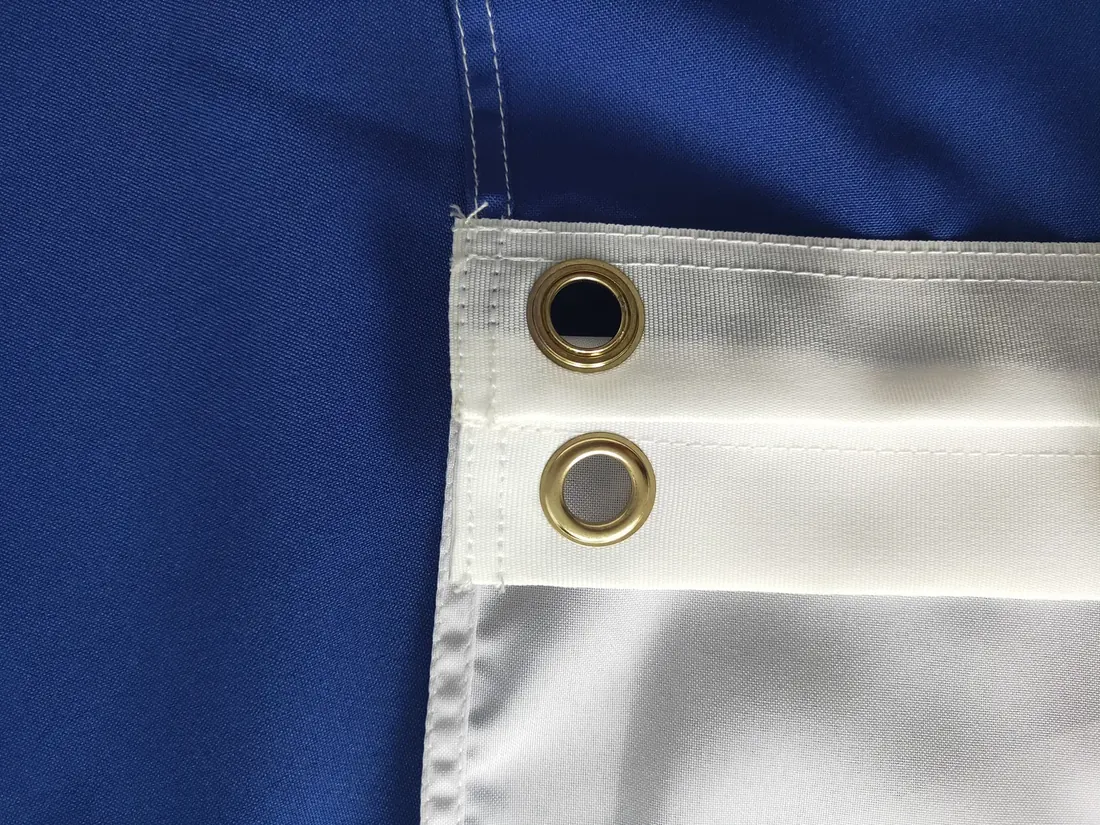
Short answer: a flag rarely fails in the middle of the print — it fails at a grommet, a hem or a corner, where wind loads concentrate on a few square centimetres of cloth. A brass grommet set into a reinforced patch, a hem folded and stitched twice, and corners reinforced at the fixing points cost little extra but decide whether a flag lasts a season or a single storm. Specify these three things on the drawing, not just the size and artwork.
If you have ever taken down a flag after one windy weekend and found the corner torn away from the grommet, you have seen the failure mode this guide is about. The print was fine. The fabric was fine. The fixing detail was not.
This is the part of a flag most quotes never mention, because it does not show in a product photo. It is also the part buyers feel first — in returns, in replacement orders and in how a flag looks after a month outside. Here is what to ask for, in plain terms.
Where flags actually tear
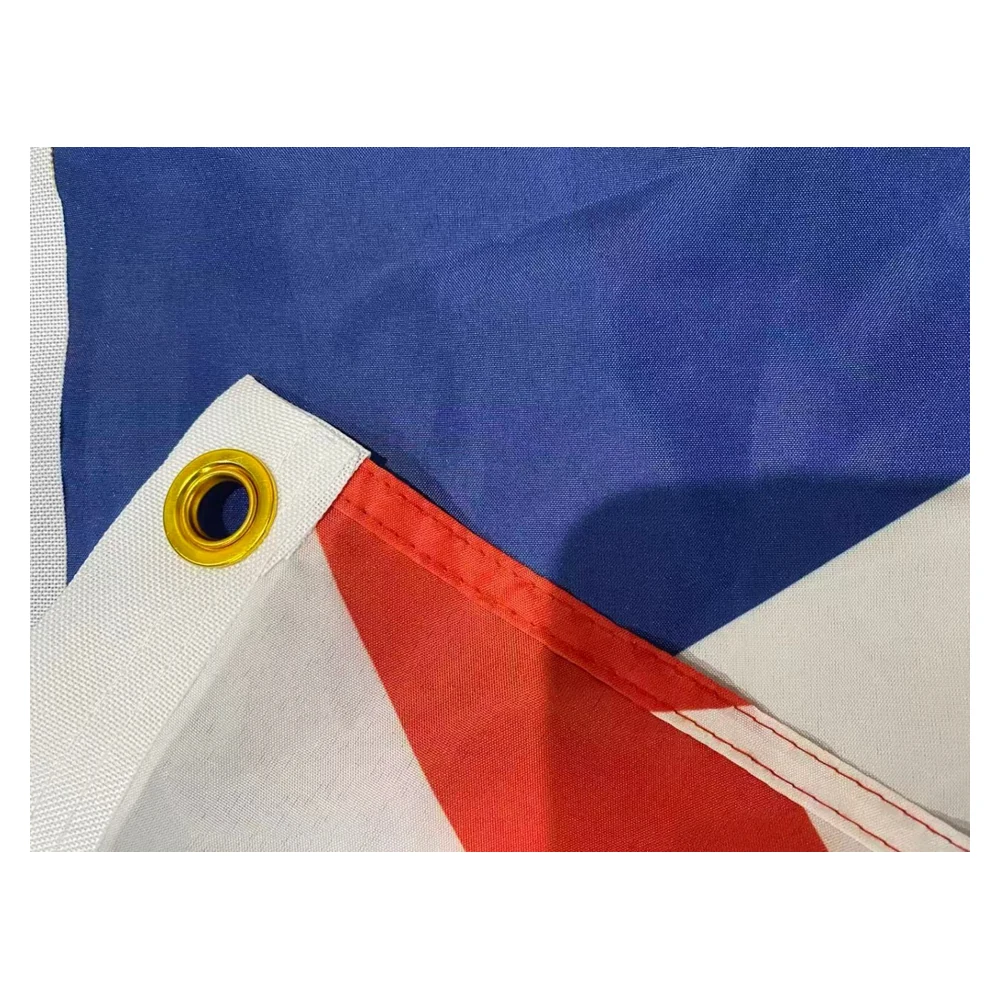
Wind does not pull a flag evenly. It loads the edge that is fixed to the pole or rope, and it flutters the free edge. Every flutter puts a small repeated load into the hem. At a grommet, that load is concentrated on one hole. Three places fail first:
- The grommet hole. A plain hole in single-layer fabric elongates under repeated pull until the metal pulls through.
- The hem seam. A single line of stitching unravels from one broken thread, then peels open along the edge.
- The corners. The top and bottom corners take the highest load because that is where the flag is anchored and where the fabric snaps taut in a gust.
None of these are fabric-quality problems. They are construction problems, and they are fixable at the drawing stage.
What a brass grommet actually does
A grommet is a metal ring pressed through the cloth to line the hole. The ring spreads the load of the rope or hook over a wider area of fabric, so the hole does not elongate. Brass is the standard choice outdoors because it does not rust and stain the print the way a steel ring eventually will.
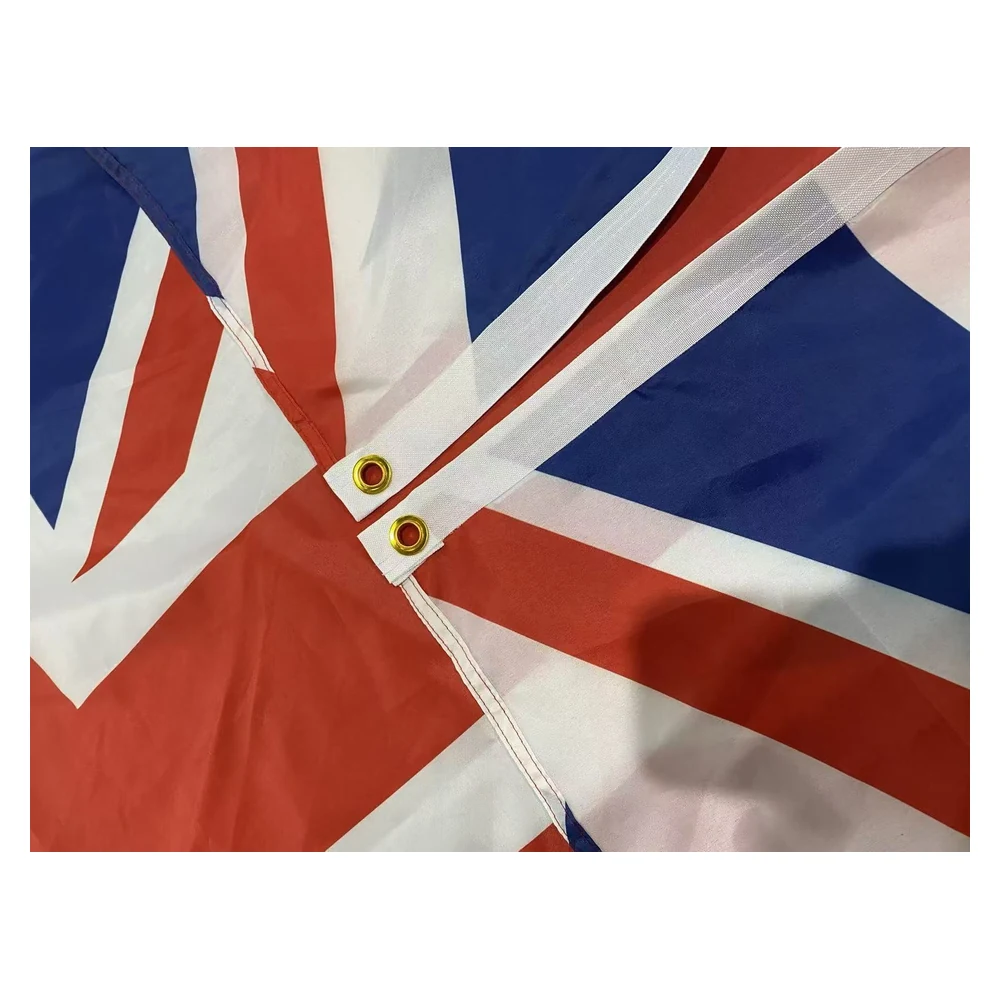
What matters is not just the ring but what sits behind it:
- A reinforced patch — an extra layer of fabric under the grommet so the load goes into two layers, not one.
- A clean cut hole, not a puncture that leaves fibres frayed and ready to tear.
- Even spacing along the edge so the flag hangs flat instead of loading one grommet more than the others.
If a quote only says "grommets included", ask whether the patch is included too. A ring without a patch is a ring on borrowed time.
Why the hem is stitched twice
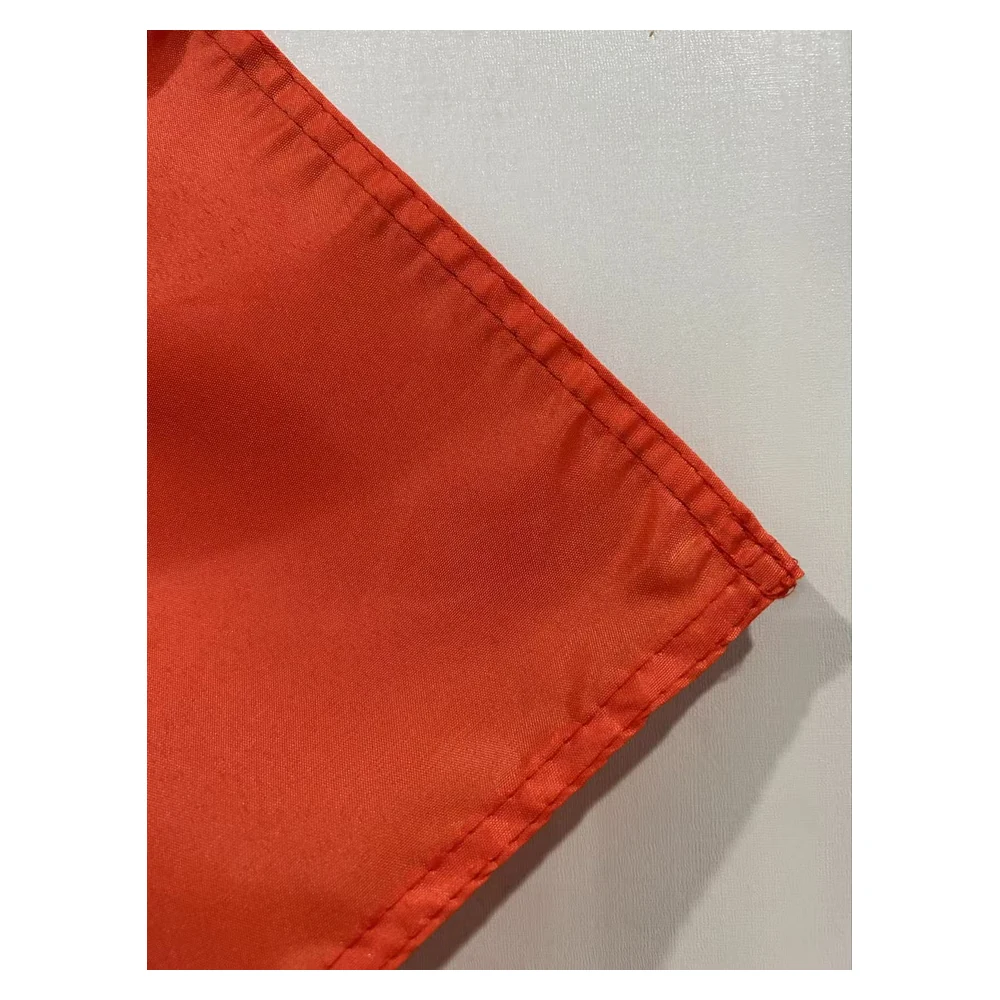
A double-stitched hem is the edge folded over and sewn with two parallel lines rather than one. It costs one extra pass through the sewing machine and it changes the failure mode completely: if one line is cut or wears through, the second still holds the fold closed.
The fold also matters. A narrow fold gives the stitches little fabric to grip and the edge curls after washing and sun exposure. A generously folded hem keeps the edge straight and gives the double stitch something to bite into. On a flag that will stay outside all season, this is the cheapest insurance in the whole build.
The corner is the real weak point
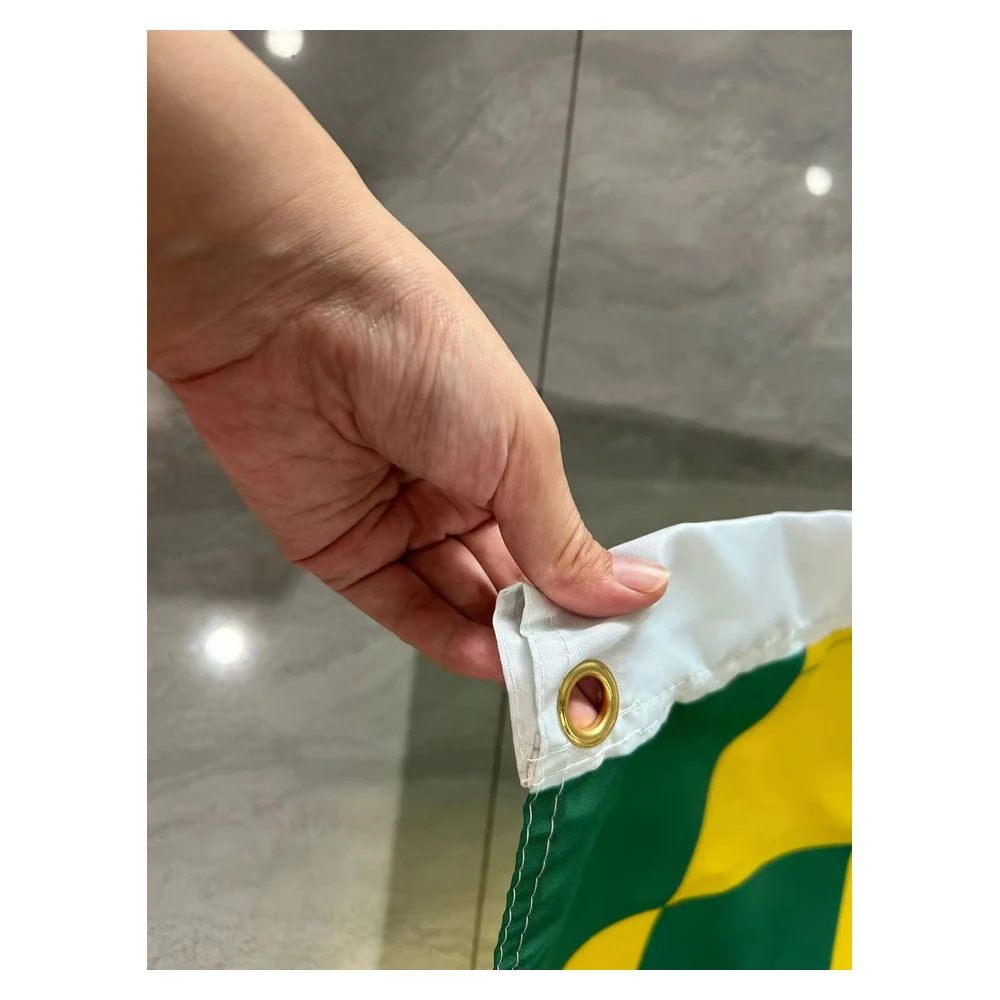
Most flag photographs show the face of the print. Few show the corners. Yet the corners are where a flag is tied, clipped or hooked, and where the whole sail load transfers into the fixing.
A reinforced corner means extra fabric folded into that point before the grommet is set — effectively the same patch principle as the grommet, applied to the highest-stress spot on the flag. Ask for it by name: "reinforced corners at all fixing points". It is a one-line drawing note that prevents the most common complaint we see.
What to put on your spec sheet
Copy these lines into your artwork brief. They take four lines and remove the ambiguity that causes most disputes about durability:
- Grommets: brass, with reinforced patch behind each one
- Hem: folded and double-stitched on all four edges
- Corners: reinforced at every fixing point
- Print: single sided (mirror reverse) or true double sided with a blackout layer — state which
The first three lines are about survival. The fourth is about how the flag reads from the back, which is a separate decision covered in our double-sided printing guide. If you are choosing between sizes before you specify the construction, the flag sizes chart gives the standard dimensions.
How this ties back to the flag format
Different flag formats put different loads on these details. A string of bunting hangs from a rope and needs its panels sewn securely to that rope, not grommets. A custom printed flag on a pole or wall takes the full wind load through its grommets, so the reinforced patch and double stitch matter most. A hand signal flag is swung by a handle instead, so the sleeve — not the grommet — is the part that has to hold.
The construction detail follows the fixing method. Once you know how the flag will be hung, the right combination of grommet, hem and corner reinforcement is straightforward.
FAQ
Do all flags need brass grommets?
No. Bunting is sewn onto a rope and hand flags use a sleeve on a handle — neither needs grommets. Grommets matter on flags that are tied or hooked to a fixed point, such as a wall, a pole or a fence. If your flag hangs from a rope, specify the rope attachment instead.
What is the difference between a single and a double stitch?
A single stitch is one line of thread along the folded hem. A double stitch runs two parallel lines. If one thread breaks or is cut, the second line still holds the fold shut — so the edge does not peel open. The extra pass costs little and is the standard we use on flags intended for outdoor use.
Why does my grommet pull out of the flag?
Almost always because there is no reinforced patch behind it, or because the hole was cut too close to the edge. The ring spreads load across the fabric, but only if the fabric around it is strong enough to take that load. A grommet set into a doubled patch of cloth solves this.
Can I add reinforced corners to an existing design?
Yes. It is a construction change, not an artwork change, so it does not affect your print file. Add the line to your spec sheet and we apply it to every fixing point. It is one of the cheapest durability upgrades available.
Does double-stitching make a flag heavier?
Marginally — a second line of thread adds negligible weight next to the fabric itself. It does not change carton dimensions or freight. The visible benefit is an edge that stays closed after a season of wind.